
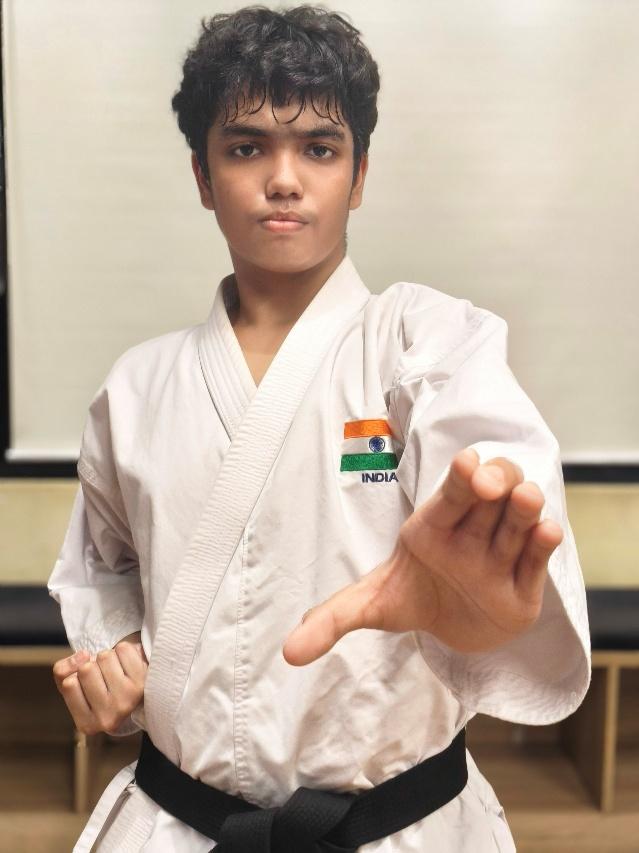
By Shihan Sachin Chavan
Founder, BUJUTSU – KWF India Martial Science Educator | Self-Defense Expert | 7th Dan Black Belt When most people think about martial arts power, they imagine strength. They picture bigger muscles, greater physical force, or intense athletic ability. However, experienced martial artists understand a different reality:
The strongest person in the room does not always generate the most power. True martial arts performance is built upon a scientific principle known as biomechanics—the study of how the human body moves efficiently to generate force, speed, balance, and control. This is one of the reasons why smaller martial artists can often outperform larger opponents and why proper technique consistently surpasses brute strength. At BUJUTSU – KWF India, understanding the science behind movement is a fundamental part of martial arts education.
What Is Biomechanics? Biomechanics is the scientific study of movement. It examines how muscles, joints, bones, balance, posture, leverage, and momentum work together to create efficient motion. In martial arts, biomechanics helps practitioners:
Generate greater power
Improve speed
Increase stability
Reduce injury risk
Enhance technique effectiveness
Improve overall performance Rather than relying solely on strength, biomechanics teaches martial artists how to use the entire body as a coordinated system.
Why Strength Alone Is Not Enough Many beginners believe that stronger muscles automatically create stronger techniques. In reality, excessive tension often reduces effectiveness. A powerful technique requires:
Correct posture
Efficient body alignment
Proper weight transfer
Timing
Coordination
Relaxation before impact Without these factors, even a physically strong individual may struggle to generate effective force. This is why martial arts emphasizes technique before power.
The Biomechanics of a Powerful Strike A powerful strike does not begin with the fist. It begins from the ground. Every effective technique follows a sequence known as the kinetic chain.
Step 1: Ground Connection Power starts from the feet interacting with the ground. The body generates force by pushing against the surface beneath it.
Step 2: Leg Drive The legs transfer energy upward through the body. Strong lower-body mechanics create stability and momentum.
Step 3: Hip Rotation The hips act as a major source of power generation. Proper hip movement significantly increases force production.
Step 4: Core Activation The core transfers energy between the lower and upper body. A stable core allows efficient power transmission.
Step 5: Technique Execution Only after the body has generated momentum does the arm or striking surface deliver the technique. This coordinated movement creates significantly more power than using the arm alone.
Why Timing Matters More Than Force Many martial artists spend years learning that timing often defeats strength. A well-timed technique:
Requires less energy
Produces greater effectiveness
Creates better control
Improves defensive capability In self-defense situations, timing and precision are often more valuable than physical power. This is why martial arts development focuses heavily on reaction, awareness, and coordination.
Balance: The Hidden Source of Power Power without balance is unstable. When a practitioner loses balance:
Force decreases
Speed reduces
Recovery becomes slower
Vulnerability increases Good biomechanics ensures that power generation never compromises stability. This allows martial artists to remain effective before, during, and after technique execution.
The Role of Breathing in Performance Breathing is often overlooked but plays a critical role in martial arts biomechanics. Proper breathing:
Improves oxygen delivery
Supports core stability
Enhances focus
Increases endurance
Improves force production Many advanced martial arts systems incorporate breathing as an essential component of technique execution.
Why Children Benefit from Biomechanical Development Martial arts is not simply about learning self-defense. It teaches children how to move efficiently and confidently. Biomechanical development helps children develop:
Coordination
Balance
Body awareness
Posture
Agility
Focus These benefits often extend into sports, academics, and everyday life. Children learn how to use their bodies intelligently rather than relying solely on strength.
Why Adults Should Understand Movement Science Modern lifestyles often involve prolonged sitting, poor posture, and reduced physical activity. Biomechanically sound martial arts development helps adults:
Improve mobility
Enhance posture
Build functional strength
Increase confidence
Reduce injury risk
Improve overall fitness The result is a healthier, more capable body that performs better both inside and outside the dojo.
Martial Arts as Applied Human Science At its highest level, martial arts is not simply fighting. It is applied movement science. Every stance, strike, block, and transition is governed by principles of:
Physics
Leverage
Balance
Timing
Coordination
Biomechanics Understanding these principles allows practitioners to achieve greater effectiveness while using less effort. This is one of the reasons traditional martial arts systems continue to remain relevant in the modern world.
The BUJUTSU Approach At BUJUTSU – KWF India, development extends beyond techniques. Students are taught to understand:
Why techniques work
How movement generates power
How balance improves performance
How biomechanics supports self-defense
How martial science develops lifelong physical capability Under the guidance of Shihan Sachin Chavan, students learn not only martial arts techniques but also the scientific principles that make those techniques effective. This approach develops stronger, more intelligent, and more capable martial artists.